Russia becomes the leading crude oil supplier to China

Russia has become the leading supplier of crude oil to the People’s Republic of China (PRC), said Alexander Novak, the Minister of Energy of Russia. It is also one of the leading suppliers of electric power to this East-Asian state. Mr Novak made these statements after taking part in the meeting of the Russian president Vladimir Putin with his Chinese colleague Xi Jinping during BRICS summit in Brazil, reports TASS news energy.
Novak-2

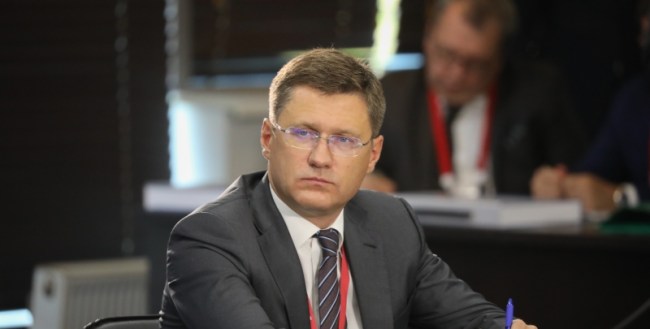
Alexander Novak, the Minister of Energy of Russia. Image credit: Ministry of Energy of Russia.

“Russia has become the leading supplier of crude oil to the PRC. In 2018 it supplied 67 million tonnes of oil worth $35 billion, an increase of 27.4% to 2017. Russian exports of coal increased by 7.6% in 2018, reaching 27.6 million tonnes. We are also a leading supplier of electric power to China, in 2018 Russia supplied 3.1 billion kW⋅h,” says Mr Novak.

He also noted that Russian energy companies, such as Novatek, Rosneft, Gazprom Neft and Sibur Holding are looking for opportunities to intensify cooperation with China. At the same time, some important energy projects in Russia, such as Yamal LNG, are being developed in partnership with the Chinese investors. He also stressed out that there were good perspectives for cooperation with Chinese companies in the development of the Russian Arctic oil and gas provinces.

These facts mean that the “energy alliance between Russia and China is being formed”, concluded Mr Novak.

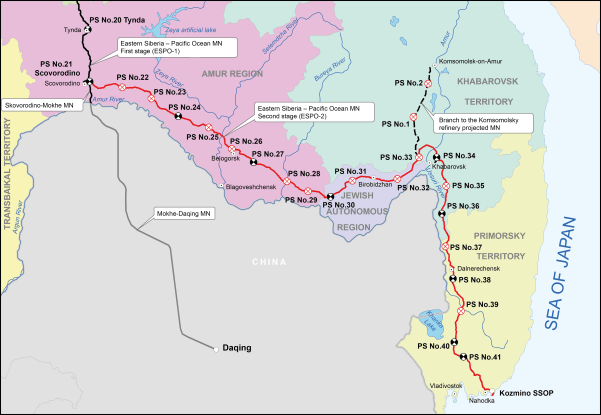
Russia has been looking to diversify its energy exports for many years as a reaction to the European policies aimed at decreasing Europe’s dependence on Russian oil and gas. Capitalising on the country’s geographical location, the Russian government supported the development of the eastern export routes for crude oil and later for natural gas. The new routes were aimed at reaching new customers in the Asia-Pacific region, which enjoyed relatively high and stable economic growth since the beginning of the new century. The first section of Eastern Siberia – Pacific Ocean (ESPO) oil pipeline from Taishet to Skovorodino was commissioned in 2009, it was extended to the Kozmino Bay on the Far East coast in 2012. In 2010 a pipeline extension to the Chinese city of Daqing was completed allowing the direct supply of Russian crude oil to the PRC.
dsc_6336

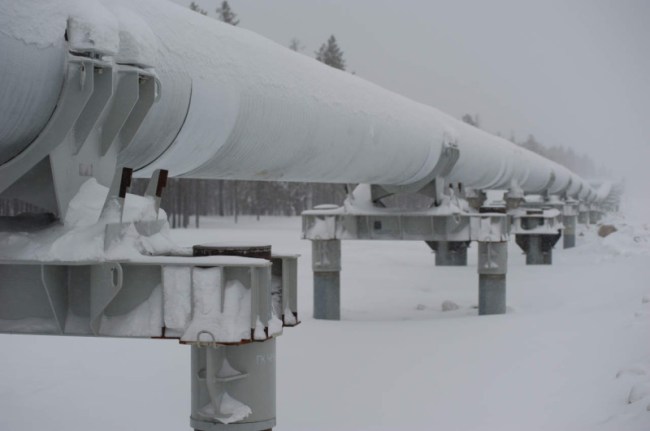
Image credit: Transneft

In May 2014 Gazprom and China National Petroleum Corporation (CNPC) signed the 30-year Sales and Purchase Agreement for Russian natural gas supply to China via the eastern route (Power of Siberia gas pipeline). According to the agreement, Gazprom will be supplying to China 38 billion cubic meters of natural gas per year. Gas supplies via the Power of Siberia pipeline are estimated to start on December 1, 2019. In 2018 Gazprom announced that the company started designing a new gas pipeline to China. The new pipeline would be an extension of the existing Sakhalin – Khabarovsk – Vladivostok gas pipeline, which was initially designed to supply natural gas to Russia’s Far East from the Sakhalin island.

Chinese oil and gas companies are also important customers and active investors in the LNG projects in Russia. Thus, in April 2019 Novatek, Russia’s biggest LNG producer, signed binding agreements with China National Offshore Oil Corporation (CNOOC) and China National Oil and Gas Exploration and Development Company (CNODC) on the acquisition of a 20% share in the Arctic LNG 2 project. China National Petroleum Corporation and Chinese Silk Route fund also own 20% and 9,9% shares respectively in Novatek’s Yamal LNG project.

Russia intensified its cooperation with China after 2014 when Western countries imposed sanctions on Russia as a result of the Ukrainian crisis. Since that time Russian oil and gas companies turned to domestic and Chinese oilfield services equipment manufacturers to substitute supplies from the U.S. and Europe, which were cut due to the sanctions.


The Commission on Foreign Investments has postponed a JV deal between Gazprom Neft and Royal Dutch Shell

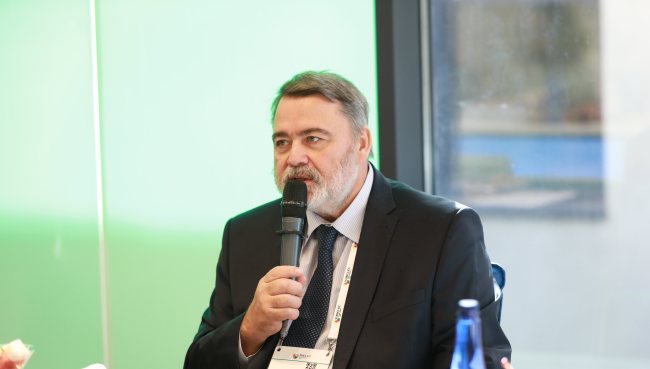
The Commission on Foreign Investments Monitoring of the Russian Government has postponed for three months its decision on the formation of a joint venture between Gazprom Neft, a Russian oil company, and Royal Dutch Shell, a global oil major, said Igor Artemyev, head of the Federal Antimonopoly Service (FAS) of the Russian Federation. The new joint venture was set up to develop license blocks of Meretoyakhaneftegaz, Gazprom Neft subsidiary, in Yamalo-Nenets Autonomous Okrug. As Meretoyakhaneftegaz’s licence blocks qualify as reserves of ‘federal significance’ under the Russian law on subsoil resources, the approval of the Government Commission is required for the deal to be closed.

Gazprom Neft Noyabrsk

Gazprom Neft’s oil field in Yamalo-Nenets Autonomous Okrug. Image credit: Gazprom Neft

“After reviewing the deal and its structure the Commission has decided to postpone the decision for three months as some of its technical and economic aspects are not fully clarified yet. The respective requests have been sent to both Gazprom Neft and Royal Dutch Shell, so the companies can work on these aspects and finalise them on a technical level. Then the Commission will review the deal again. The chances for the deal to be approved are high,” says Igor Artemyev.

Gazprom Neft and Royal Dutch Shell signed the Sale and Purchase Agreement for a 50% interest in the authorised share capital of Meretoyakhaneftegaz on 6th June 2019 during St. Petersburg Economic Forum.

Meretoyakhaneftegaz currently holds licencing rights to the Meretoyakhinskoye oil field. Several license blocks, including the Tazovsky and Severo-Sambrugsky, as well as two Zapadno-Yubileiny blocks in Yamalo-Nenets Autonomous Okrug, will be automatically transferred to the JV’s asset portfolio as soon as the transaction is closed. Total resources in place at fields to be owned by Meretoyakhaneftegaz is estimated at about 1.1 billion tonnes of crude oil.

Mr Artemyev has also confirmed, that according to the agreement, Royal Dutch Shell would pay Gazprom Neft 9.3 billion Russian rubles (approx. $145 million) for its shares and invest up to 100 billion rubles (approx. $1.56 billion) in this project.

Igor Artemyev

Igor Artemyev, head of the Federal Antimonopoly Service (FAS) of the Russian Federation. Image credit: FAS

The Government Commission on Foreign Investments Monitoring oversees foreign investment in legal entities that have strategic importance for national defence and state security. In the oil and gas industry, the Commission’s approval is required for all the deals with licence blocks ‘of federal significance’, which according to the Federal Law on Subsoil Resources hold extractable reserves exceeding 70 million tons of oil or 50 billion cubic meters of natural gas.

Gazprom Neft to conduct an offshore 3D seismic survey with new locally designed seabed sensors

Gazprom Neft, a Russian state-run oil company, became the first oil company in Russia to use locally developed “КРАБ” (CRAB) seabed sensors to conduct 3D seismic surveys on the company’s Ayashskiy license block in the Sea of Okhotsk in the Russian Far East. Previously Russian oil companies used predominantly imported sensors for offshore exploration, reports Gazprom Neft.

“Gazprom Neft – Sakhalin”, Gazprom Neft subsidiary, intends to use new sensors to conduct a 3D seismic survey offshore Sakhalin island within its Neptune field in 2019 (for the total area of 400 square kilometres) and Triton field in 2020 (covering the area of 300 square kilometres).

CRAB technology has recently successfully passed several tests on Gazprom Neft oilfields. Currently, the company has around 3,000 sensors to be used for 3D seismic surveys on its offshore fields.

Gazprom Neft

Image credit: Gazprom Neft

“Technological leadership based on the implementation of modern, locally developed technologies is one of the priorities for the company”, says Gazprom Neft Deputy CEO for shelf projects Andrey Patrushev. “The innovation used on the Sakhalin shelf would allow Gazprom Neft to conduct seismic surveys on the Ayashskiy license block, one of the most promising shelf projects of Gazprom Neft.”

CRAB seabed seismic sensors were developed under the joint project of Gazprom Neft, Ministry of Industry and Trade of the Russian Federation, and JSC “Marine Arctic Geological Expedition”.

The Ayashskiy license block is located in the Sea of Okhotsk, in the North-East sector of the Sakhalin island shelf, 55 kilometres from the shore. Sea depths in the area are up to 90 metres. Neptune oilfield with OIP of 415 million tonnes of crude oil was discovered by Gazprom Neft in 2017. The discovery of Triton oilfield with 137 million tonnes of crude oil OIP followed the next year.

Import of equipment for oil exploration and production in waters deeper than 150 meters or in the offshore area north of the Arctic Circle are currently prohibited by the U.S. and the E.U. sanctions against Russia. Thus, Directive 4 of the 2014 “sectoral” OFAC sanctions states that “the provision, exportation, or re-exportation, directly or indirectly, of goods, services, or technology in support of exploration or production for deepwater, Arctic offshore, or shale projects that have the potential to produce oil in the Russian Federation, or in maritime area claimed by the Russian Federation and extending from its territory.”

Cooperation of Gazprom Neft, Ministry of Industry and Trade, and JSC “Marine Arctic Geological Expedition” in development and production of the CRAB seabed sensors is another example of Russia’s drive to achieve technological independence in the most vital areas of the oil and gas industry. Currently being used by Gazprom Neft in relatively shallow waters (up to 90 meters) the CRAB technology may be developed further to provide reliable seismic data while conducting seismic surveys in deep waters, affected by the U.S. and E.U. sanctions. As a result, Western seismic equipment manufacturers may not lose a significant market in the Russian offshore and onshore exploration, but also gain a formidable competitor in the international markets.

Thus, SSC “Yuzhmorgeologiya”, a Rosgeologiya subsidiary, plans to complete its 2D seismic surveys offshore Bahrain in Q3 2019, reports Energyland. The contract with Tatweer Petroleum – Bahrain Field Development Company W.L.L. was signed on 20 March 2019 in Manama, Bahrain. With the development of new technologies, that were previously exported from the West, Russian oilfield services companies may become more active in the international markets, offering high-quality services at competitive rates.

Rosgeologia will create joint funds with Gazprom Bank and RDIF to finance geological exploration in Russia

Rosgeologia, a Russian state-run geological exploration holding, and Gazprom bank have signed an agreement to create a joint fund to finance geological exploration activities in Russia. The fund will be set up in 2020, reports Rosgeologia.

The agreement was signed by Sergey Gorkov, CEO and Chairman of Rosgeologia, and Andrey Akimov, Chairman of Gazprom Bank, during St. Petersburg International Economic Forum. According to the agreement, the new fund will be set up to finance geological exploration activities in Russia. It is planned that the fund will be actively involved in the funded companies’ management and operations.

bureniye_2

Image credit: Rosgeologia

Rosgeologia and Gazprom Bank also agreed to cooperate on other relevant projects, such as the development of new technologies and digital solutions, including dedicated software, for geological exploration.

On the same day, Rosgeologia signed an agreement with the Russian Direct Investment Fund (RDIF) to create a joint fund for venture financing of the geological exploration in Russia. Two parties also plan to investigate opportunities for the development of the “ГеоLab” geology research centre at Moscow University of Physics and Technology. This project is aimed at the development of a digital platform for the collection, storage, modelling and processing of the geological big data.

The agreements between Rosgeologia, Gazprom Bank and RDIF emphasise the importance the Russian government pays to the development of new technologies for geological exploration in Russia. Due to the Western sanctions, Russian oil and gas companies currently face difficulties while exploring for hydrocarbons in the Arctic and on the country’s continental shelf. At the same time, the government is concerned about the future of the oil and gas production in the country, since the lion’s share of Russia’s crude oil output currently comes from the mature fields with declining resource base. After oil prices plummeted in 2014, Russian oil companies have significantly cut their geological exploration activities, which is considered the riskiest part of the industry cycle, in order to cut costs in the new market environment. In turn, this had a negative impact on the companies’ reserve replacement ratio. For this reason, the Russian government plans to provide necessary incentives for the E&P companies willing to take risks of geological exploration and greenfield development of the new oil fields in both explored and unexplored regions of the country (e.g. Western and Eastern Siberia). Thus, in September 2018 the Ministry of Energy of Russia announced the initiative to introduce certain tax benefits as incentives for the E&P companies willing to intensify their geological exploration in Western Siberia.

Rosgeologia (“Russian geology”) is a state-run holding that provides Russian oil and gas and mining companies with a full range of geological exploration services, including geological and geophysical surveys, exploration drilling, reservoir monitoring etc. According to the company, Rosgeologia has all the necessary equipment and technologies to conduct geological and geophysical surveys offshore on the continental shelf. The company was formed by the decree of the Russian president Dmitriy Medvedev on 15 July 2011. 100% of the company belongs to the Russian government.

Schlumberger withdraw its application to acquire Eurasia Drilling Company

Russian Federal Antimonopoly Service (FAS) has announced that Schlumberger, a global oilfield services provider, withdrew its application to acquire a significant share in Eurasia Drilling Company (EDC), one of the biggest Russian drilling services providers, reports “Kommersant” business newspaper.

The Commission on Foreign Investment of the Russian government approved the deal on 28 April 2018, allowing Schlumberger to acquire a share of up to 49% in EDC. Later on, FAS imposed several requirements for the prospective deal. Thus, Schlumberger had to agree to transfer relevant technologies to EDC and to sell its share to a Russian investor in the case the U.S. imposes new sanctions against Russian oil and gas sector. However, the deal had to get the final approval from the Russian Government, which was consistently postponing the decision thus forcing Schlumberger to withdraw its application. According to undisclosed sources in the government, the main reason for that was the U.S. sanctions. Another source said that the government was not satisfied with the technologies Schlumberger agreed to transfer to EDC.

yermak-lge

Image credit: EDC

This is the second attempt of Schlumberger to purchase this important asset. Earlier, the company tried to acquire a 45,6% share in EDC for approximately 1.7 billion U.S. dollars but didn’t get approval from the Russian government. On 21 January 2019 Paal Kibsgaard, Schlumberger’s CEO, said that the company would look for alternative ways to partner with EDC because Schlumberger still considers Russian onshore drilling market very attractive.

Following the news, Kirill Dmitriev, CEO of the Russian Direct Investment Fund (RDIF), said that the fund is ready to increase its offer to acquire a share in EDC from current 16.1% to 30%. However, the fund is only interested in a minor share in the company. He also noted that the deal can be closed with the participation of investors from the U.A.E. and Saudi Arabia. According to its charter, RDFI must attract at least 50% of foreign investments when funding projects in Russia. It was reported earlier, that to buy a share in EDC the fund planned to use a consortium of the Russian-Chinese investment fund, China-Eurasian Economic Cooperation Fund, and funds from the Middle East, including Mubadala from the United Arab Emirates.

Russian oil and gas experts stress out that no other foreign company would risk acquiring a share in EDC due to the sanctions. Although Russian oil service market, and especially its drilling segment remain very attractive, independent service providers have recently faced problems trying to get contracts due to the fact that Rosneft, a Russian state-run oil champion, decided to keep drilling services in-house. At the same time, it has been reported that Russian E&P companies were ready to increase their drilling activities in the near future.


Saudi Aramco to acquire share in Novomet, a leading Russian artificial lift equipment manufacturer

Saudi Energy Minister Khalid Al-Falih has announced that Saudi Aramco, a Saudi state-run oil company, may close the deal of purchasing a share in Novomet, a Russian artificial lift equipment manufacturer, in February 2019. In December 2018 Kirill Dmitriev, the CEO of the Russian Direct Investment Fund (RDIF), said that Saudi Aramco and Novomet had “finalised the parameters of the deal”, which would see Saudi investments in one of the leading Russian oilfield services (OFS) equipment providers, reports Prime news agency. Saudi Aramco also plans to purchase pumping systems produced by Novomet.

“We have finalised the main parameters of the Novomet deal to supply Russian-made pumping equipment to Saudi Aramco and other companies, and Saudi Aramco will become an investor in this project,” said Mr Dmitriev.

foto-po-ventilnym

Image credit: Novomet

In June 2018 the CEO of Novomet-Perm Maxim Perelman said that RDIF, Public Investment Fund (PIF) of Saudi Arabia and Saudi Aramco plan to acquire 30.76% share, which is currently controlled by the Russian state-run investment fund Rosnano. According to Mr Perelman, the investors expressed their interest in “developing the asset further”, and the deal was expected to be closed by the end of 2018, reported “Kommersant” business newspaper.

Rosnano has been looking for a buyer of its share in Novomet since June 2016. In January 2017 Halliburton, an American oil service company, applied for the Russian Federal Antimonopoly Service’s (FAS) permission to acquire 100% stake in Novomet. However, one year later it was announced that a $1 billion worth deal had been cancelled. The reason for the cancellation was never disclosed but it was most likely caused by the position of the Russian government, which was resistant to the idea of selling such an important asset to an American company because of the technological sanctions imposed by the U.S. on the Russian oil and gas sector. The Russian oil industry is currently struggling to increase output from mature oil fields in Volga region and Western Siberia; from this perspective, a successful national artificial lift equipment provider could be considered a strategic asset by the government.

Established in 1991, Novomet is the leading Russian manufacturer of artificial lift equipment, first of all, ESP systems. Its product line includes pumps, motors, protectors, VSDs (variable speed drives), and sensors, as well as a great number of custom-made auxiliaries for specific and complex wells. According to Rosnano, in 2016 Novomet’s market share in the artificial lift equipment market was 20% (2nd) in Russia and 2.3% (7th) worldwide. Around 60% of Novomet is controlled by the company’s senior management team, 30.76% belongs to Rosnano, and minor shares are controlled by the Russian investment and private equity funds Baring Vostok and Russia Partners.

During his visit to Riyadh on 16 January 2019 Kirill Dmitriev announced that Russia and Saudi Arabia had been working on several joint projects in the oil and gas, oilfield services and petrochemical sectors, including joint development and manufacturing of equipment for the oil and gas industry. The number of joint investment projects between Russia and Saudi Arabia is expected to increase significantly in 2019, said Mr Dmitriev.

Russian Direct Investment Fund and Public Investment Fund of Saudi Arabia currently manage a $10 billion joint investment fund dedicated to investments in energy-related projects in both Russia and Saudi Arabia. According to the Russian press, apart from Novomet, FDIP and PIF consider purchasing a share in Eurasia Drilling Company (EDC), one of the leading drilling services providers in Russia. Last year Schlumberger, a global oilfield services champion, also expressed interest in this asset. The deal was approved by FAS but has not been closed by this date.

Russian-Saudi alliance in the energy industry may look unlikely since Russia and Saudi Arabia not only remain competitors on the global oil market but also have quite the opposite views on various political issues in the Middle East (for example, the war in Syria, where these countries support the opposite sides of the conflict). However, recently both countries managed to maintain good relations and work together on several energy-related issues. After successful cooperation on the first OPEC+ deal in 2016, which helped to decrease production and thus stabilise plummeting oil prices globally, the countries intensified their cooperation in other aspects of the oil and gas industry, including technology development. Russia and Saudi Arabia have been experiencing similar problems, such as depleting resources and decreasing production on the large and mature oil fields, which helped both countries to establish themselves as global oil production and export champions. Maintaining the status of the world’s leading oil producers requires both countries not only to expand their geological exploration activities, invest in offshore exploration and development of unconventional resources but also actively implement EOR methods to increase production from the mature fields.

The Russian oil sector was negatively affected by the E.U. and U.S. sanctions that considerably limited the country’s access to new technologies on the global OFS market. On the other hand, even remaining one of the key U.S. allies in the Middle East,  Saudi Arabia feels uncomfortable with the current shale oil development in the U.S., seeing new American shale oil industry as a competitor and the U.S. policy to sustain low oil prices as a threat to its prosperity and security as a nation in the long term. For this reason, Russia and Saudi Arabia currently share the same interest in developing their own technologies to reduce heavy dependence on Western oilfield services providers, so their technological alliance does not look unimaginable.

Russia may fully localise development and manufacturing of LNG equipment in 5-7 years

The Minister of Energy of Russia Alexander Novak has announced that the Ministry and other government agencies have been working on a state programme aimed at increasing production and export of Liquefied Natural Gas (LNG). Another strategic goal of the programme is to ensure that Russian LNG projects will be fully supplied with locally developed technologies and equipment, including LNG tankers, reports Kommersant business newspaper. From this perspective, the programme would allow the country to act preemptively protecting its LNG sector in anticipation of any possible U.S. sanctions.

According to Alexander Novak, in the next few years, the Russian industry will be able to provide up to 80% of the equipment required by the country’s LNG sector, while production of the rest 20% will be localised in 5-7 years. These goals were set in the roadmap approved by the Government of Russia in August. Achieving them would reduce Russian LNG industry’s dependence on imported equipment.

Yamal2017-11[1]

Novatek’s Yamal LNG facility. Image credit: Novatek

The Ministry of Energy expects that investments in the LNG sector in Russia would reach 10 trillion rubles (approx. 154 billion USD) until 2035, while the annual revenue from LNG exports would increase to 35 billion USD. By 2035 the global demand for LNG would rise to 600 million tonnes per year with China and India accounting for over 50% of demand in Asia. This would allow Russia to increase its share on the global LNG market from the current 4% to 15-20% and thus join the club of the global top three LNG exporters. However, this would require Russia to increase its LNG production capacity fivefold: from the current 21 million to 100 million tonnes a year.

Novatek, one of the leading Russian LNG suppliers, plans to increase its capacity to 57 million tonnes a year, says its CEO Leonid Michelson.

“LNG projects, which are currently under construction or have recently got an investment approval would only cover the world’s demand until 2025. After that, the new window of opportunity would arise, since the growing demand would require additional LNG facilities with a capacity of 250 million tonnes a year,  85% up to the current capacity. I believe that Russia can satisfy around 40% of this new demand,” says Mr Michelson, cited by Kommersant.

The Russian government expects that by the beginning of 2019 Russia would have seven LNG facilities, including two large-capacity facilities, Gazprom’s Sakhalin-2 and Novatek’s Yamal LNG. Another large LNG facility can be built at Shtokman gas field by 2035.

Russian Ministry of Energy proposes new tax benefits to combat oil production decline in Western Siberia

During the discussion in the Russian government on 18 September, Alexander Novak, the Minister of Energy of Russia, announced the Ministry’s initiative to introduce certain tax benefits for oil companies operating in Western Siberia, reports Kommersant. According to Mr Novak, the proposed measures would provide incentives for the E&P companies to intensify geological exploration in the region, as well as to introduce new EOR technologies at mature oilfields with declining production. This, in turn, would help to offset negative trends and increase oil production in Western Siberia, thus improving tax revenues from the Russian oil and gas industry in the future.

The Ministry of Energy estimates that Russia’s oil production will reach its peak in 2021 when the country is expected to produce about 570 million tonnes of crude oil. In 2018 Russian oil production will reach 553 million tonnes, the highest volume since the breakdown of the Soviet Union. However, after 2021 Russia’s oil production is expected to decline, falling to about 310 million tonnes per year by 2035. Crude oil production in Western Siberia, the main oil-producing region of Russia, may decrease two times plummeting from 330 to 180 million tonnes per year, or even falling to 146 million tonnes if no new oilfields are discovered in the region. As a result, the Russian state budget would lose around 3.3 trillion rubles of tax revenues (around 50 billion USD).

Vostochno-Messoyahskoye

Vostochno-Messoyahskoye oilfield in Western Siberia. Image credit: Gazprom Neft

To combat these negative trends the Ministry of Energy of Russia has proposed several measures aiming at providing incentives for local oil and gas companies to increase investments in hydrocarbon exploration and production projects in Western Siberia.

The first measure proposed by the ministry is a so-called ‘uplift’, a higher depreciation coefficient on investments, which will be applied to such capital spendings as drilling new wells, hydraulic fracturing activities, etc. Applying a higher depreciation coefficient would allow the E&P companies to increase total spendings on their cash flow statements thus decreasing the declared taxable profit for the mineral extraction tax. The Ministry of Energy estimates that these measures would allow adding 461 million tonnes of crude oil from 2019 – 2035, representing an additional 5.3 trillion rubles of tax revenues to the state budget. Second, the same tax benefits are proposed to be applied to geological exploration activities in order to stimulate the exploration of new oilfields in the region.

Novak-2

Alexander Novak, Minister of Energy of Russia. Image Credit: Ministry of Energy of the Russian Federation

Thirdly, the Ministry of Energy proposes to adjust the parameters of the so-called excess-profit tax, a special tax on additional income from hydrocarbon production, as well as to intensify the process of transferring more oilfields (and eventually all Western Siberian oilfields) to this taxation scheme. According to the ministry’s estimates, this would allow increasing tax revenues by 1.2 trillion rubles, while investments in oil exploration and production in the region would grow up to 3.5 trillion rubles until 2035.

Fourthly, the Ministry of Energy proposes to expand the list of new Western Siberian oilfields eligible to mineral extraction tax benefits, also eliminating the time limit for these benefits (the tax benefits are currently planned to terminate in 2021). Fifthly, it proposes to apply a lower mineral extraction tax coefficient to the oilfields where high-tech methods and equipment are used for oil production. These may include various Enhanced Oil Recovery methods, such as chemical injections (use of polymers), carbon dioxide injection, thermal EOR methods etc. Sixth, the Ministry of Energy also proposes to introduce tax benefits for the development of oil fringes. Based on the ministry’s analysis, this kind of reserves is currently estimated at 6.9 billion tonnes, so putting these reserves in production would significantly increase the region’s oil output.

It is noteworthy, that the Ministry of Energy has started a new advocacy campaign to introduce tax benefits for the oil and gas industry for the first time in several years. Last time notable tax benefits were introduced to encourage the development of hard-to-recover hydrocarbon resources, such as shale oil, and for the continental shelf projects in 2012-2013. Since that time the Russian government was struggling to balance the state budget. For this reason, the Ministry of Finance did not accept any tax benefits initiatives because revenues from the oil and gas constitute a significant part of the country’s budget. However, in 2019 Russian state budget will have a surplus for the first time since 2011, and apparently, the Ministry of Energy finds this time appropriate to initiate the discussion about future of the oil production in Western Siberia.

Western Siberia is the core oil-producing region of Russia, which accumulates about two-thirds of the total proven oil reserves of the country. According to the Ministry of Natural Resources of Russia, in 2017 oilfields from the West Siberian oil basin accounted for around 60% of the country’s total oil production. However, around 52.1% of the region’s oil and gas reserves are depleted. For this reason, the share of Western Siberia in Russia’s oil production is expected to decline. For example, the share of Hanty-Mansi autonomous region in Russia’s oil production has fallen from 48% in 2015 to 46% in 2017. The Oxford Institute for Energy Studies predicts that “if left without intervention, oilfields in Siberia would naturally decline at around 10-15% per annum.” This situation requires the Russian government to act promptly to keep production in Western Siberia at the same level and ensure stable tax revenues from this large oil and gas province.

Introducing tax benefits would increase capital spendings by Russian E&P companies in Western Siberia on geological exploration, drilling and various EOR methods, including thermal recovery, hydraulic fracturing, gas injection, artificial lift etc. This, in turn, provides new business opportunities for local and international oilfield service companies, as well as manufacturers of the high-tech oilfield equipment. Since the majority of the West Siberian oilfields are not affected by the E.U. and the U.S. sanctions, these opportunities can be also pursued by the Western service providers and equipment manufacturers.

Gazprom designs new gas pipeline to China via the ‘Eastern Route’

Gazprom, a Russian state-owned gas company, has started designing a new gas pipeline to the Peoples Republic of China (PRC), reports Kommersant. The new pipeline will be an extension of the existing Sakhalin – Khabarovsk – Vladivostok pipeline, which was initially designed to supply natural gas to Russia’s Far East from the Sakhalin island. The planned capacity and length of the new pipeline are not announced.

Designing a new pipeline in the Far East reflects Gazprom’s growing interest to diversify its customers and supply natural gas to China via the so-called ‘Eastern Route’. Earlier this year Gazprom’s senior management announced that the new pipeline from the Sakhalin island would become a new priority for the company after the ‘Power of Siberia’ gas pipeline is commissioned in December 2019.

foto_press-sluzhba_gazprom_transgaz_tomsk_00025_2

Power of Siberia pipeline construction. Image credit: Gazprom

At the end of 2017, Gazprom signed a Heads of Agreement with CNPC, a Chinese state-run oil and gas company, in which the companies agreed on the terms of natural gas supply to China. This agreement, however, specified neither price nor the starting date of supply. Under the 30-year Sales and Purchase Agreement signed by Gazprom and CNPC in 2014, the Russian company will supply to China 38 billion cubic meters (bcm) of natural gas per year. For this reason, the company has already started working on the extension of the Sakhalin – Khabarovsk – Vladivostok pipeline in order to increase its capacity from 5.5 to 20 billion cubic meters a year by 2020.

The current macroeconomic environment in the Asia Pacific region is favourable for increasing gas exports to China due to the rapid growth of natural gas consumption in the country. China’s purchases of liquefied natural gas (LNG) increased by 45 per cent since the beginning of 2018 reaching 40.4 billion cubic meters. According to International Energy Agency (IEA), China will become the world’s top importer of natural gas next year, boosted primarily by LNG purchases. Chinese demand for natural gas will rise by almost 60 per cent between 2017 and 2023 to 376 billion cubic metres, including a rise in its LNG imports to 93 bcm by 2023 from 51 bcm in 2017.  At the same time, Gazprom expects that by 2035 China’s annual demand for Russian gas supply via pipelines will rise to 80-110 billion cubic meters.

Prices for natural gas and, first of all, LNG supplies in Asia are also growing. Thus, according to Platts, LNG supplies to Northeast Asia in December 2018 is currently traded at $12.2 per MBTU or about $440 per 1,000 cubic meters. At the same time, Gazprom currently supplies gas to its customers abroad at an average price of $245 per 1,000 cubic meters. For this reason, $440 is a very comfortable and attractive price for Gazprom, and the company could insist on linking the price of its pipeline gas sold to CNPC to LNG prices in Asia since gas from the Sakhalin island can also be exported as LNG via Sakhalin-2 LNG terminal.

Moreover, due to geopolitical and trade confrontation with the U.S., China may try to avoid purchasing LNG from American gas producers, both in short- and long-term perspectives. At the beginning of August 2018, China announced it will put a 25% tariff on LNG imports from the U.S. as part of a wider plan to introduce $60 million worth of measures to counterbalance trade tariffs recently imposed by the Trump administration. If the trade wars between China and the U.S. continue, other large gas exporters – such as Qatar, Australia and Russia – will most likely take advantage of the situation.

However, stable supply of natural gas to China via the proposed pipeline will require further development of the Sakhalin island resource base and, first of all, resources of Yuzhno-Kirinskoye gas field. As we reported earlier, Yuzhno-Kirinskoye field is affected by the U.S. sectoral sanctions that would make it difficult for Gazprom to purchase necessary technologies and equipment from any American or European manufacturers. For this reason, Gazprom will either have to purchase the equipment from China or develop a ‘sanctions-avoiding’ purchasing scheme with one of the European suppliers. The latter option is supposed to be more difficult since such equipment is usually produced for specific projects, making it easy for regulators to monitor and control such deals. Gazprom expects to bring Yuzhno-Kirinskoye field online in 2023, reaching its planned output of 21 billion cubic meters per year in 2034.

Transneft paid off a $10 billion Chinese loan ahead of schedule to mitigate currency exchange and sanctions risks

On 25 July 2018 Transneft, a Russian state-owned oil pipeline monopoly, paid off a $10 billion loan from the Chinese state bank CDBC ahead of schedule, said the company’s CEO Nikolai Tokarev. Though he did not disclose the sum of the final payment, according to Kommersant, a Russian business newspaper, in July Transneft paid CDBC 109.85 billion rubles (approx. $1.75 billion).

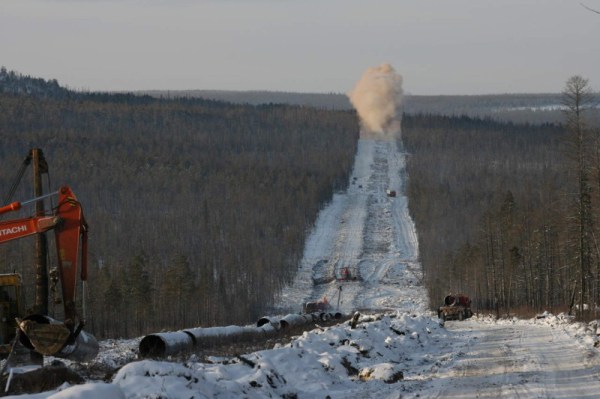
33olekminskaldanbyro-vzrivnierabotidlyapodgotovkitranshei

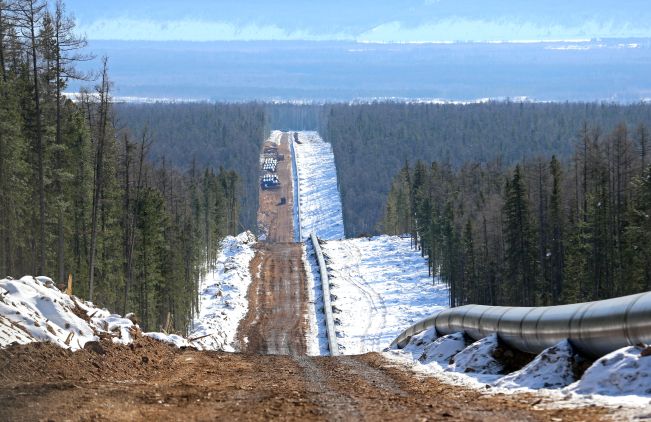
Construction of ESPO pipeline. Image credit: Transneft

After the planned repayment of $1 billion Eurobonds on 7 August, the company does not have any further debt in foreign currencies, which under the current economic conditions is significantly more expensive to finance. Due to ruble depreciation, the real interest rate of the CDBC loan increased in 2018 to 13%, while the interest rate of the Eurobonds reached 21%. The company is actually able to secure financing at any time in local currency in Russia at a comfortable interest rate of up to 10%. During the last years, Transneft has been consistently avoiding borrowing in foreign currencies in order to mitigate exchange risks as the majority of the company’s revenues comes in Russian rubles, said Nikolay Tokarev.

10_bcto_1_eng

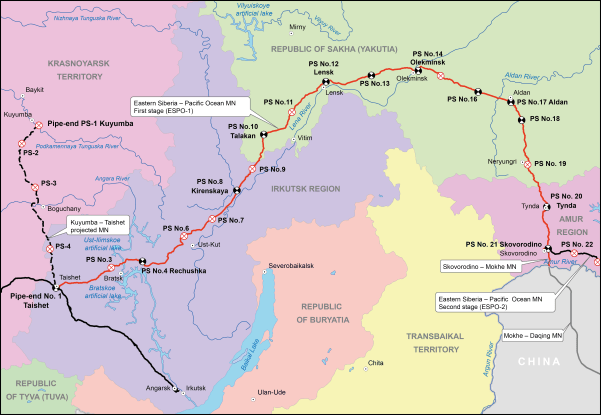
ESPO-1 pipeline. Image credit: Transneft

Transneft had contracted a twenty-year loan from CDBC back in 2009 to finance the construction of the East Siberia – Pacific Ocean (ESPO) oil pipeline and its extension. The first line of the ESPO pipeline (ESPO-1) with the capacity of 30 million tonnes of oil per year was commissioned in December 2009. The pipeline was designed to transport crude oil for 2,694 kilometres from Taishet in Eastern Siberia to Skovorodino, with 2,046 kilometres extension to Kozmino oil terminal near the town of Nakhodka (ESPO-2). The ESPO-2 pipeline with the capacity of 30 million tonnes of oil per year was commissioned in 2012. Currently, Transneft works on increasing the throughput capacity of the ESPO-1 pipeline system up to 80 million tonnes per year in order to increase oil supply to the People’s Republic of China (PRC) and to Kozmino special seaport, as well as to three refineries in the Russian Far East. Furthermore, the capacity of ESPO-2 will be increased to 50 million tonnes per year. The abovementioned projects will be completed in 2020 and 2019 respectively.

7_bcto_2_eng

ESPO-2 pipeline. Image credit: Transneft

According to industry analysts, Transneft decided to get rid of any liabilities in foreign currencies due to its unsuccessful currency exchange risks hedging deal with Sberbank. As a result, the company lost 65.5 billion rubles and filed a claim against Sberbank in the court. Later Transneft and Sberbank reached a settlement agreement, under which the bank provided Transneft with a 253 billion roubles loan. Since the interest rate of Sberbank’s loan was much lower than the one of CDBC, Transneft was able to use these funds to repay its Chinese loan.

According to the Russian press, the company planned to pay its Chinese debt off in 2019. However, Transneft was able to accumulate extra liquidity since its plans to acquire Summa Capital’s share in Novorossisk Sea Trade Port has been postponed due to a prosecution of the Summa Capital’s owners – Ziauddin and Magomed Magomedovs. Another factor that might have affected the company’s decision to repay the loan ahead of schedule was potential U.S. sanctions that would make it more difficult for Transneft to finance borrowings in U.S. dollars.